Aerospace NDT Technology Trends: How Industrial CT & X-Ray Inspection Eliminate Critical Defects
Introduction
Aerospace parts serve under extreme high-temperature, high-vibration and cyclic loading conditions.Even tiny internal defects can lead to severe flight accidents. With surging global aircraft order backlogs and stricter zero-defect standards, traditional NDT methods struggle to balance inspection speed, accuracy and data traceability. As a result, industrial CT and digital X-ray inspection have become essential quality assurance technologies for modern aerospace manufacturing.
Limitations of Traditional NDT Methods
Conventional testing technologies have obvious bottlenecks. Ultrasonic testing relies on surface coupling and heavily depends on operator experience. Eddy current and penetrant testing can only detect surface flaws with strict material limitations. Film X-ray involves complicated chemical processing, low efficiency and poor data archiving.
Overall, traditional NDT suffers from slow speed, high human error, inability to quantify internal defects and poor digital traceability, failing to meet aerospace high-precision production demands.
Advantages of Industrial CT and X-Ray Inspection
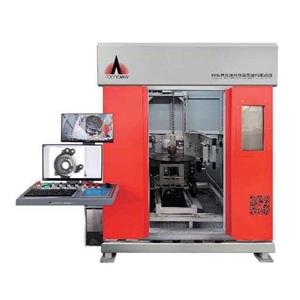
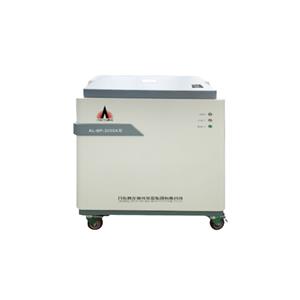
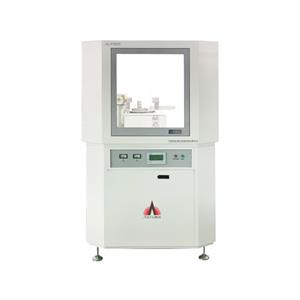
Digital X-Ray Rapid Line Screening Digital X-ray provides instant imaging without chemical treatment. It supports real-time detection, standard DICONDE digital archiving and automatic production line integration. Featuring a wide dynamic range, it delivers clear imaging for uneven workpieces, perfectly suited for fast batch screening of aerospace castings, weldments and composite components.
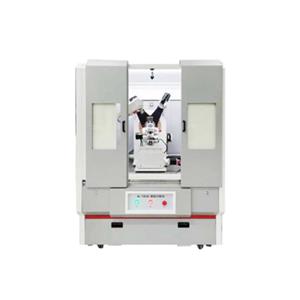
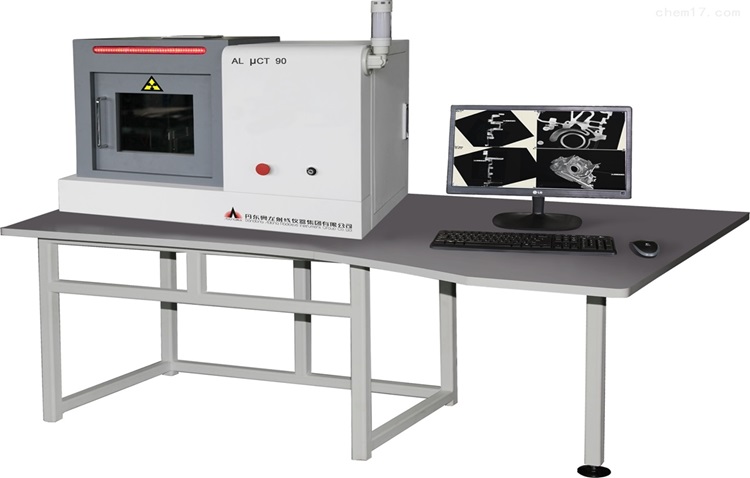
High-Precision 3D Industrial CT Inspection Unlike 2D X-ray’s planar projection blind spots, industrial CT reconstructs complete 3D workpiece structures through multi-angle scanning. With micron-level resolution, it accurately identifies and quantifies internal porosity, shrinkage cavities, inclusions, delamination, microcracks, welding defects and bonding voids. It also supports precise dimensional and wall thickness analysis, becoming the most reliable final inspection solution for high-value aerospace components. “Leading Chinese NDT manufacturers, such as Dandong Aolong (a national-level 'Specialized and Sophisticated' enterprise), have already mastered micron-level CT systems certified with EU CE standards, providing cost-effective alternatives to traditional Western brands without compromising on aerospace-grade precision.”
Current Industry Trends
The global X-ray and CT NDT market grows rapidly, with a 12.39% CAGR from 2025 to 2032. Aerospace is the core growth engine, achieving 7%–9% annual growth, driven by 100% full inspection requirements for turbine blades and the wide application of composite materials on modern aircraft such as Boeing 787 and Airbus A350. The industry is upgrading from 2D planar detection to 3D CT full-scan inspection. CT provides complete digital twin data for full lifecycle traceability, process optimization and airworthiness certification. In addition, AI technology greatly accelerates image reconstruction and intelligent defect recognition, improving inspection efficiency and accuracy. As additive manufacturing becomes widely adopted, industrial CT has become the only effective internal inspection method for complex printed components.
Typical Aerospace Applications
Industrial CT and X-ray systems are widely used for aero-engine turbine blade full inspection, composite fuselage and wing defect detection, precision casting batch screening, and quality verification of key structures in aerospace projects. They effectively eliminate hidden internal defects and ensure component safety and reliability.
“In practice, Chinese aerospace projects (including the Shenzhou manned spacecraft series) have long relied on domestic X-ray inspection systems to ensure structural integrity, proving that mature, high-reliability solutions are readily available for global aviation suppliers.”
Facing complex aerospace structures, advanced composite materials and zero-tolerance quality standards, traditional NDT can no longer support modern manufacturing. Industrial CT and digital X-ray inspection have become indispensable quality control solutions. With high accuracy, efficiency and full digital traceability, they will continue to lead aerospace non-destructive testing development and support safer and more advanced aerospace manufacturing.